2K Polyurethane vs. Regular Paint: What's the Real Difference?
Two coatings can look identical on day one and behave completely differently by year three. Here is what actually separates catalyzed 2K polyurethane from cabinet paint.
Any coating looks good the week it is sprayed. The difference shows up when a wet dish towel hangs on a door for a day, when cooking oil settles above the range, and when a toddler drives a toy truck into a lower cabinet.
One Component vs. Two
Standard cabinet paint is a single-component coating: it dries as solvent or water evaporates, and the film stays chemically the same forever. 2K polyurethane is two components — resin plus a catalyst hardener. When they mix, a chemical reaction crosslinks the film into a dense, unified surface. That is the same class of coating used inside cabinet factories and on automotive panels.
What Crosslinking Buys You
- Hardness. The cured film resists dents, scuffs, and fingernail marks that would mark softer paint.
- Chemical resistance. Cooking oils, cleaners, wine, and citrus wipe off instead of etching in.
- Moisture resistance. Around sinks and dishwashers, water beads rather than creeping into edges.
- Colour stability. UV-stable resins keep whites from drifting yellow over time.
Why It Cannot Be Rolled On
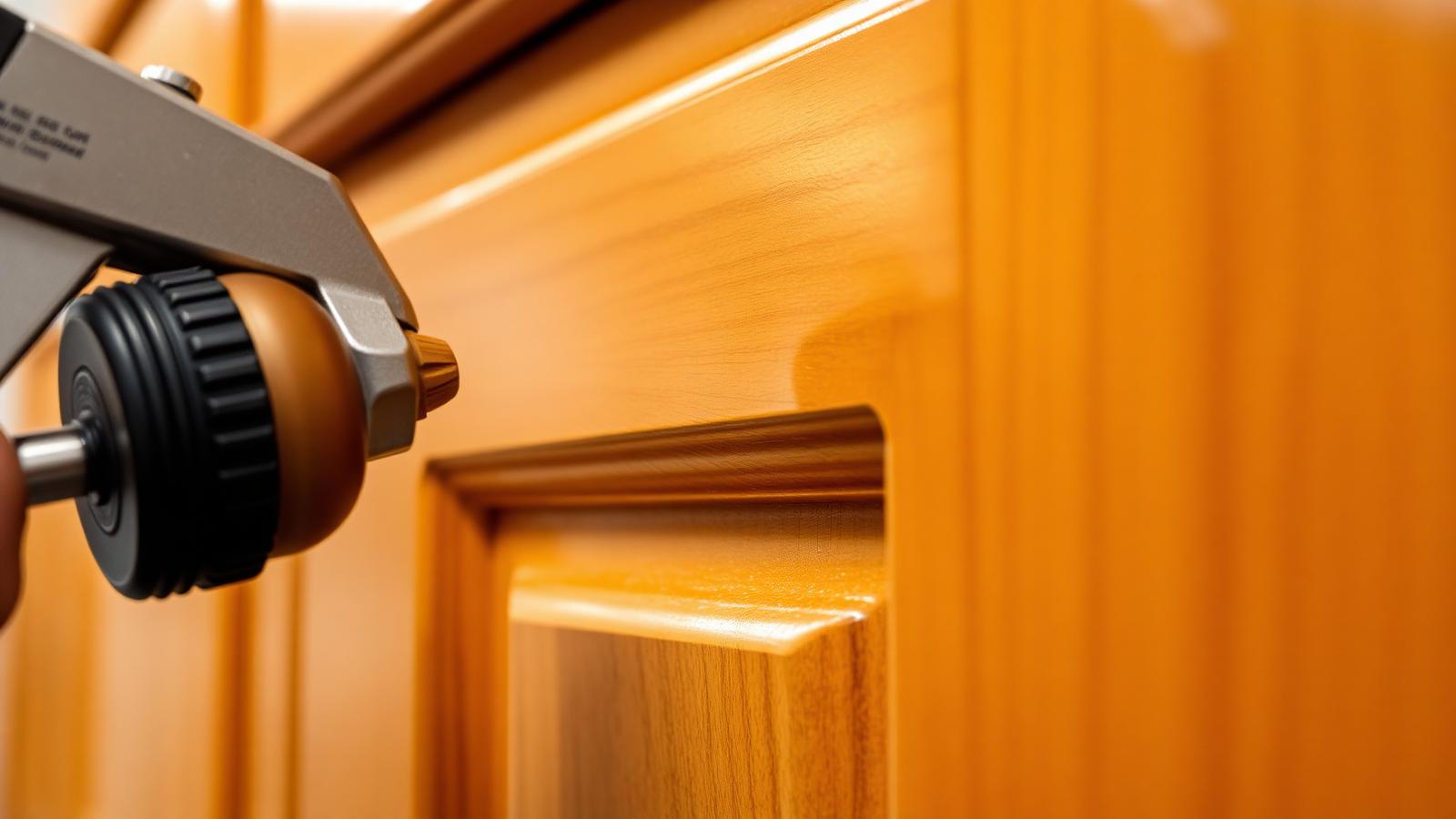
2K polyurethane has a working window measured in hours, not days. It must be sprayed with proper equipment, in a filtered and temperature-controlled environment, with fresh-air respirators for the crew. That is why it is not a weekend project — and why the results do not look like a weekend project either.
The Cost Question
A 2K refinish costs more per door than a brush-and-roll paint job. It also lasts several times longer, and it comes with a written five-year warranty against chipping, peeling, and yellowing. Measured over the life of the kitchen, it is the cheaper of the two options.